The Content of the Gold Plates of the Book of Mormon

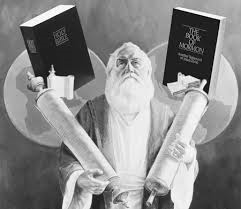
The Gold Plates were a combination of records

My intent in writing a blog is to introduce sincere investigators to the Book of Mormon.  I want to help others learn about the Book of Mormon.  I hope my readers will begin to read the Book of Mormon on their own and use this blog to help them in understanding it.  In my last blog I talked about the Gold Plates, their appearance and construction.  This blog will continue on with the content of the Gold Plates.  The Gold Plates were a unique compilation of other records put together by Mormon.  The following is a short list of the records which are included in the Gold Plates.  I’ll give a description of each in this blog.

  • Large plates of Nephi
  • Small plates of Nephi
  • The Plates of Brass
  • The Plates of Ether
  • The personal writings of Mormon and Moroni

There were “many records of many kinds”mormonpng

The Title Page of the Book of Mormon starts thus: “An account written by the hand of Mormon upon plates taken from the plates of Nephi.”   As I stated in my one of my previous blogs,  Mormon, a great prophet/military general, lived around 315 to 385 AD.  He had access to the many records written by various other prophets from the time that Lehi and his family left Jerusalem around 600 B.C.  These records were engraved on metal plates.  That’s almost 1000 years of history!   He had a divine commission to select from among those numerous records that which was to comprise the Book of Mormon. This was his life’s work. It is because of this divine commission to assemble the plates that the Book of Mormon is named after him.  His work was a work of love.  It was a work directed by God. Mormon gives us some idea of the extensiveness of records which he had access to when he writes the following:

Helaman 3:13  And now there are many records kept of the proceedings of this people, by many of this people, which are particular and very large, concerning them.
14 But behold, a hundredth part of the proceedings of this people, yea, the account of the Lamanites and of the Nephites, and their wars, and contentions, and dissensions, and their preaching, and their prophecies, and their shipping and their building of ships, and their building of temples, and of synagogues and their sanctuaries, and their righteousness, and their wickedness, and their murders, and their robbings, and their plundering, and all manner of abominations and whoredoms, cannot be contained in this work.
15 But behold, there are many books and many records of every kind, and they have been kept chiefly by the Nephites.

Let’s start at the beginning!

The Book of Mormon starts with the family of Lehi being directed by God to leave Jerusalem around the year 600 BC because of its prophesied imminent destruction.  In 587 BC Nebuchadnezzar, King of Babylon, pillaged Jerusalem, destroyed the temple and carried many Jews captive to Babylon.   That is the beginning setting of the Book of Mormon.   Lehi’s son, Nephi, begins the narrative of his family’s journey into the wilderness close to the Red Sea and their eventual journey to the “promised land” of America.

Nephi writing1 I, NEPHI, having been born of goodly parents, therefore I was taught somewhat in all the learning of my father; and having seen many afflictions in the course of my days, nevertheless, having been highly favored of the Lord in all my days; yea, having had a great knowledge of the goodness and the mysteries of God, therefore I make a record of my proceedings in my days.

4 For it came to pass in the commencement of the first year of the reign of Zedekiah, king of Judah, (my father, Lehi, having dwelt at Jerusalem in all his days); and in that same year there came many prophets, prophesying unto the people that they must repent, or the great city Jerusalem must be destroyed.

Thus begins the Book of Mormon.   Nephi commences his record on what is simply called the plates of Nephi.  

Nephi is commanded to make two records

Nephi commenced his record on what is simply called the plates of Nephi.   A few years later he was commanded to make an additional record. He describes this commandment in 1st Nephi chapter 9. This additional record was “for the special purpose that there should be an account engraven of the ministry of my people.” The first record was to contain more of a history of the “reign of the kings and their wars and contentions.” For clarity, it is referred to as the large plates of Nephi. The additional record is known as the small plates of Nephi.  Although Nephi  happy to comply with the Lord’s request, he records that he didn’t know the Lord’s purpose in this request. He writes, “Wherefore, the Lord hath commanded me to make these plates for a wise purpose in him, which purpose I know not.” The next verse of scripture typifies Nephi’s faithful attitude.  He writes:

1 Nephi 9:6 The Lord knoweth all things from the beginning; wherefore, he prepareth a way to accomplish all his works among the children of men; for behold, he hath all power unto the fulfilling of all his words.

The Lord indeed had a “wise purpose” in asking Nephi to make two records.  Almost two thousand years when Joseph is translating the plates, part of the manuscript, containing his translated material to that point was stolen.  That story deserves its own blog post!  It will be forthcoming.

The Small Plates of Nephi

The small plates of Nephi, include 1st and 2nd Nephi, Jacob, Enos, Jarom and Omni. In contrast to the “large plates of Nephi” they are not an abridgment. They are included in our current Book of Mormon exactly as they were written by the original authors. Historically the small plates of Nephi cover the same time period as the large plates up to the reign of King Benjamin around 130 BC.  They are 143 pages and cover 470 years, although most of the material is concentrated on the writings of Nephi, his brother Jacob and Jacob’s son, Enos.   Those three books occupy 138 pages and only cover about 200 years.   As you can see 270 years are covered quickly in only five pages.  The small plates of Nephi are a priceless treasure. Along with the historical narrative of Lehi’s leaving Jerusalem and traveling to the promised land of America, Nephi includes some remarkable prophecies, dreams and visions of both himself and his father. Prophecies of the coming of Christ, his ministry, death and resurrection are interwoven skillfully throughout the small plates.  Jacob adds some important doctrinal chapters.  In inspired language he assures us that the Jews worshiped the Father in the name of Christ.

Jacob 4:4-5  For, for this intent have we written these things, that they may know that we knew of Christ, and we had a hope of his glory many hundred years before his coming; and not only we ourselves had a hope of his glory, but also all the holy prophets which were before us.

5 Behold, they believed in Christ and worshiped the Father in his name, and also we worship the Father in his name.

The Large Plates of Nephi

The large plates of Nephi contain the books of Mosiah, Alma, 3rd and 4th Nephi. This section of the Book of Mormon begins in 130 BC and covers the very critical years preceding the coming of the Savior into the world. Mosiah, Alma and 3rd Nephi combined are 320 pages, but only cover about 165 years. This is a very concentrated focus on the teachings of the prophets, their missionary labors, the intrigues of war, the political machinations and the faithfulness and apostasy of both the Lamanites and the Nephites, and the preparation of a people to receive the Savior. Fourth Nephi covers the time after the coming of Jesus until the Nephites fall into complete apostasy, about 320 years. It is a very short, but powerful synopsis of these years.  After Jesus three day personal ministry they created a ideal society in which they had their goods in common.  There were “no poor among them,” and the love of God prevailed.

4 Nephi 1:2 – 3
2 And it came to pass in the thirty and sixth year, the people were all converted unto the Lord, upon all the face of the land, both Nephites and Lamanites, and there were no contentions and disputations among them, and every man did deal justly one with another.
3 And they had all things common among them; therefore there were not rich and poor, bond and free, but they were all made free, and partakers of the heavenly gift.

This society lasted for almost 200 years!  It shows us that through following the teachings of Jesus Christ perfect society can exist.

4 Nephi 1:15 – 18
15 And it came to pass that there was no contention in the land, because of the love of God which did dwell in the hearts of the people.
16 And there were no envyings, nor strifes, nor tumults, nor whoredoms, nor lyings, nor murders, nor any manner of lasciviousness; and surely there could not be a happier people among all the people who had been created by the hand of God.
17 There were no robbers, nor murderers, neither were there Lamanites, nor any manner of -ites; but they were in aone, the children of Christ, and heirs to the kingdom of God.
18 And how blessed were they! For the Lord did bless them in all their doings;

Unfortunately after 200 years the society started to break down through pride love of wealth.  They stopped having the goods in common.  Individual wealth was stressed and class distinctions developed.  These are powerful teachings for our day as we are to prepare for the Second Coming of the Savior.

The Plates of Brass

Although the Plates of Brass do not have their own “book,” they are quoted extensively brass platethroughout the Book of Mormon, particularly by Nephi.  What are the Plates of Brass? Why were they in Lehi’s possession?  Lehi was told in a dream that his life was in imminent danger and that he and his family should leave Jerusalem immediately.  Lehi was one of many prophets living in Jerusalem in this dangerous time.  He has testified of the wickedness of Jerusalem and prophesied of its destruction.  Because his teachings were so unpopular, the Jews threatened to take his life.   Lehi’s family left hastily leaving all their possessions.  They took only their food, tents and bare necessities.   After they had traveled far enough that their safety was secured the Lord spoke to Lehi again in a dream and told him that his sons needed to go back to Jerusalem for the Brass Plates.  The Brass Plates were a record of the Jews and the words of the prophets.  Nephi describes them thus:

 1 Nephi 5:11 – 14
11 And he beheld that they did contain the five books of Moses, which gave an account of the creation of the world, and also of Adam and Eve, who were our first parents;
12 And also a record of the Jews from the beginning, even down to the commencement of the reign of Zedekiah, king of Judah;
13 And also the prophecies of the holy prophets, from the beginning, even down to the commencement of the reign of Zedekiah; and also many prophecies which have been spoken by the mouth of Jeremiah.
14 And it came to pass that my father, Lehi, also found upon the plates of brass a genealogy of his fathers;

The Brass Plates were their scriptures.  They were essential for their spiritual survival. They were a record of God’s dealings with his children.  They contained the gospel of Jesus Christ.  They contained God’s laws and his words through the words of his prophets.  From these Lehi taught his children.  From these Nephi, his brother Jacob, and later in the Book of Mormon, Jesus himself, taught the people from the words of Isaiah.  Later in the Book of Mormon Alma teaches the importance of the Brass Plates and their other scriptures.

 Alma 37:8 – 9
8 And now, it has hitherto been wisdom in God that these things should be preserved; for behold, they have enlarged the memory of this people, yea, and convinced many of the error of their ways, and brought them to the knowledge of their God unto the salvation of their souls.
9 Yea, I say unto you, were it not for these things that these records do contain, which are on these plates, Ammon and his brethren could not have convinced so many thousands of the Lamanites of the incorrect tradition of their fathers; yea, these records and their words brought them unto repentance; that is, they brought them to the knowledge of the Lord their God, and to rejoice in Jesus Christ their Redeemer.

Nephi also includes several chapters from the book of Isaiah, almost verbatim to our current King James Version of the Bible. Isaiah lived about 100 years before Nephi and was probably the most influential prophet in Nephi’s life. He read and understood Isaiah’s prophecies of the coming Messiah and wanted his people to know and understand them. Nephi wrote:

1 Nephi 19:23 And I did read many things unto them which were written in the books of Moses; but that I might more fully persuade them to believe in the Lord their Redeemer I did read unto them that which was written by the prophet Isaiah; for I did liken all scriptures unto us, that it might be for our profit and learning.

The Plates of Ether

The book of Ether in the Book of Mormon is a unique contribution to the Book of Mormon in that it is a history of an entirely different group of people than the rest of the book. It is a record that was found on this continent during the explorations of a group of Nephites during the reign of King Mosiah. During their explorations they found “a land which was covered with dry bones; yea, a land which had been peopled and which had been destroyed.” Searching among the ruins they found a record of this people engraved on plates of ore. After the explorations they returned to their king and presented the record to him. It is a fascinating account of a group of people who were directed by God to migrate to this continent around the year 2200 BC.  This record was included with the Nephite records which were handed down through the prophets. Moroni, Mormon’s son, later abridged this record and it is know as the book of Ether.

The personal writings of Mormon and Moroni

The Book of Mormon concludes with the personal writings of Mormon and Moroni, each with a separate book. Mormon witnesses and records the final destruction of his people, the Nephites. His record is a sad account of a once righteous people who were prepared for the personal ministry of Jesus Christ to a violent, degraded, uncivilized people who delighted in bloodshed. It has much to teach us about the effects of seeking revenge and refusing to call upon God.

Mormon is killed by the Lamanites and his son, Moroni finishes his father’s record with some firm admonitions for our day.  He writes Behold, I speak unto you as if ye were present, and yet ye are not. But behold, Jesus Christ hath shown you unto me, and I know your doing.”  He bears witness of him who is to bring this record forth in our day, Joseph Smith,  And blessed be he that shall bring this thing to light; for it shall be brought out of darkness unto light, according to the word of God; yea, it shall be brought out of the earth, and it shall shine forth out of darkness, and come unto the knowledge of the people; and it shall be done by the power of God.”   He bears witness of Jesus Christ, miracles and faith, encourages his readers to Doubt not, but be believing, and begin as in times of old, and come unto the Lord with all your heart, and work out your own salvation with fear and trembling before him.”  

Moroni adds his abridgment of the Plates of Ether to the record, then adds some precious additional writings of his father in the form of letters and sermons.

Moroni buries the platesMoroni burying the plates

Moroni wanders for some years before he buries the plates.  The heading to the book of Moroni suggests that he was alive for 20 more years.   It was a time of bitter war among the remaining Lamanites.  It must have been a lonesome time for Moroni.  He records:

Moroni 1:2 – 3
2 For behold, their wars are exceedingly fierce among themselves; and because of their hatred they put to death every Nephite that will not deny the Christ.
3 And I, Moroni, will not deny the Christ; wherefore, I wander whithersoever I can for the safety of mine own life.

Before he buries the plates he closes the record with an invitation to his readers to pray and find out for themselves the truthfulness of the Book of Mormon.

Moroni 10:4 – 5
4 And when ye shall receive these things, I would exhort you that ye would ask God, the Eternal Father, in the name of Christ, if these things are not true; and if ye shall ask with a sincere heart, with real intent, having faith in Christ, he will manifest the truth of it unto you, by the power of the Holy Ghost.
5 And by the power of the Holy Ghost ye may know the truth of all things.

Come unto Christ

If the Book of Mormon is another witness of Jesus Christ, which it is, then you would expect its opening and closing words to bear witness of Christ.  The very first chapter of the 1st Nephi begins with a vision which Lehi has of Christ.

 1 Nephi 1:8 – 10
And being thus overcome with the Spirit, he was carried away in a vision, even that he saw the heavens open, and he thought he saw God sitting upon his throne, surrounded with numberless concourses of angels in the attitude of singing and praising their God.
9 And it came to pass that he saw One descending out of the midst of heaven, and he beheld that his aluster was above that of the sun at noon-day.
10 And he also saw twelve others following him, and their brightness did exceed that of the stars in the firmament.

The Book of Mormon closes with Moroni’s eloquent and urgent plea for his readers to come unto Christ.

 Moroni 10:32 – 33
32 Yea, come unto Christ, and be perfected in him, and deny yourselves of all ungodliness; and if ye shall deny yourselves of all ungodliness, and love God with all your might, mind and strength, then is his grace sufficient for you, that by his grace ye may be perfect in Christ; and if by the grace of God ye are perfect in Christ, ye can in nowise deny the power of God.
33 And again, if ye by the grace of God are perfect in Christ, and deny not his power, then are ye sanctified in Christ by the grace of God, through the shedding of the blood of Christ, which is in the covenant of the Father unto the remission of your sins, that ye become holy, without spot.

I bear testimony that I have put Moroni’s promise to the test.  I have read the Book of Mormon many times.  I have asked God, the Eternal Father, in the name of Christ, if it is true.  I have received confirmations to my heart, mind and soul that it is true.  I invite my readers to do the same.

.

Posted in Book of Mormon construction, Uncategorized | Tagged , , , , , , , , , , | 1 Comment

What Are the Gold Plates?

WHAT ARE THE GOLD PLATES?  gold plates official image

One may wonder just what does the LDS church mean by the Gold Plates from which the Book of Mormon was translated.   I have grown up in the Church of Jesus Christ of Latter-day Saints.  I grew up singing about the “Gold Plates.”  There is a Primary song that goes like this, “The golden plates lay hidden deep in the mountain side.”   Joseph Smith was directed by a heavenly messenger to a place on the Hill Cumorah in upstate New York to dig up a metal box containing metal plates and other artifacts.   These are referred to as the Gold Plates.  From those plates, under divine inspiration, he translated the Book of Mormon.  This is my heritage.  Yet, I recognize that to others, this idea of finding metal plates with ancient writing, dating back to 600 BC, might seem like a far-fetched idea.  Is that plausible?

Many ancient records have been found throughout the world

The world of archeology is always filled with new discoveries.  That’s the passion of archeology.  Have there been other discoveries an ancient plates?   To answer to that question is a resounding, yes!  There has been a treasure trove of ancient records written on both papyri and metal plates discovered in both the New and Old Worlds.  Research and documentation has been extensive.  Paul Cheesman, a noted archeologist, wrote the following in an LDS Ensign article.

The Plates of Darius I, ruler of Persia from 518–515 B.C., are the closest parallel to the Book of Mormon yet discovered. Two tablets, one of gold and one of silver, were placed in each stone box to be buried at the four corners of his palace. They describe the boundaries of his kingdom, praise Ahuramazda, “the greatest of all the gods,” and pray protection upon Darius “and my royal house.” They were discovered by an archaeological team in 1938. (National Archaeological Museum, Tehran, Iran.)https://www.lds.org/ensign/1979/10/ancient-writing-on-metal-plates?lang=

Extensive research has been done on the archaeology, the geology, and the culture of the Book of Mormon, knowing that if such a society existed there would be a trail of evidences left in the earth.   All research is extremely interesting and valuable, but to members of the LDS church, the validity of the Book of Mormon does not lie in external sources.   External sources do not prove that the Book of Mormon is true.  A testimony of its truthfulness comes through study and prayer.   As Paul Chessman writes, “Archaeological evidences which support The Book of Mormon do not convert, but we would hope that these thought-provoking discoveries might inspire and excite the reader to the point where they would want to study The Book of Mormon with real intent and gain a testimony of its truth.” (ibid)

What did the Gold Plates look like?

When collecting historical data various sources are often put together to form a more complete picture.  It is the same when the plates from which the Book of Mormon was translated.  Many people made statements describing different aspects of the plates, their appearance, size and weight.  In court, testimonies that vary slightly from each other are often seen as more truthful than when they match precisely. If all the statements are exactly the same, it can indicate that the witnesses have compared notes to fabricate a story that is too perfect.   Here is some of what we do know.  Much of this material is taken from an article in the New Era Magazine of the LDS church.  https://www.lds.org/new-era/2007/07/what-did-the-golden-plates-look-like?lang=eng

  • They had the “appearance of gold.”  It is never stated that they were made of pure gold.

“Many critics have been quick to point out that if the record was made of solid gold it would have weighed much more than a person could lift. Besides being too heavy, thin plates of pure gold would not function well as a book. The metal would be so soft that it could easily tear from the rings, and engraving would be limited to one side.

The text of the Book of Mormon itself refers to Nephi’s seeking “ore” from which to make his plates. Metal ore usually has a mixture of various metals in it. Gold and silver are often mixed together in an alloy called electrum. Logically, the Book of Mormon plates could have been composed of these two metals. Some have suggested a combination of copper and gold.”

  • They were about 6 inches by 8 inches and about 4 inches tall.
  • “They seemed to be pliable like thick paper, and would rustle with a metalic sound when the edges were moved by the thumb, as one does sometimes thumb the edges of a book.” (quoted by Emma Smith)
  • They weighed from 40 to 60 lbs.
  • They were bound by three “D” shaped rings.
  • A portion of the plates  were sealed to the point that they looked solid.

The plates were sealed by Moroni after he had separated from the rest of his people. He would have used materials that were readily available to him at that time. The descriptions say they were “securely bound” and “appeared solid.” The statements indicate a complete encapsulation of the plates to protect and preserve them for the future.” (Ibid)

  • There were fine engravings on both sides of the plates stained with a black, hard stain to make them more readable.
  • The writing was from right to left, consistent with the Hebrew language.

A Model of the Plates

At the top of this blog I’ve included an image of the official facsimile made by the Church of Jesus Christ of Latter-day Saints for the Church History Museum.   Here is the statement by Kirk Henrichsen concerning the making of the facsimile.

“In an attempt to be as accurate as possible, all known statements about the plates were compiled and compared. Unfortunately, there was not space in this article to include all of the descriptions.

“The process of making and using the model of the plates taught us more about them and led to some logical deductions. The difficulty in making the plates would encourage a scribe to be careful to fill the whole page and not waste any space. We learned how difficult it is to turn soft metal plates over loose metal rings. You have to lift each one carefully or they bind against the rings. Pliable metal changes with the pressures of movement; it becomes brittle and breaks. The holes have to be an elongated shape larger than the rings and cannot be too close to the edges or they tear out.” (Ibid)

The Value of the Gold Plates

We do not know the monetary value of the Gold Plates, but it is certain that such an archaeological find would be highly sought after.  Joseph could have sold them for monetary gain, and in fact, was cautioned by the angel Moroni that he would tempted to do so.  The following is from Joseph Smith’s history.

 (the angel Moroni) “added a caution to me, telling me that Satan would try to tempt me (in consequence of the indigent circumstances of my father’s family), to get the plates for the purpose of getting rich. This he forbade me, saying that I must have no other object in view in getting the plates but to glorify God, and must not be influenced by any other motive than that of building his kingdom; otherwise I could not get them.” JSH 1:46)

Thanks be to Joseph that he was true to his calling!  To honest truth seekers the value of the plates is in the eternal truths that it contains, the testimony of Jesus Christ that permeates it pages.

A testimony of the Book of Mormon comes through faith, not sight

Would actually seeing the plates increase the likelihood of one believing that it is true? Perhaps it would motivate one to investigate further, but that investigation must be done with a sincere heart, with real intent, and with faith in Christ.  For me I do not have to see, to believe.  As Jesus said to Thomas,”Blessed are those who have not seen, yet have believed.”  Truly that is the beginning of a testimony of the truthfulness of the Book of Mormon.

“Seeing the plates would not necessarily motivate someone to accept the restoration of the gospel and make changes in his or her life. That motivation comes from reading and accepting the teachings of the Book of Mormon. What really matters is the spiritual witness that is promised to those who humbly seek to know the truth of these things. A true testimony of the Book of Mormon comes from reading it and, as counseled by Moroni in a promise he left to us in Moroni 10:3–5, praying about it.” (Ibid)

I think the information about the appearance of the plates is fascinating.  I like to picture them and picture Joseph translating them.  I love the story of the coming forth of the Book of Mormon, but this is not where my testimony comes from.  I have read the Book of Mormon many times and have had a spiritual witness that it is true.   I invite all who read my blog to do the same.

Posted in Book of Mormon construction | Tagged , , , , , , , , | Leave a comment

Overview of the Book of Mormon

THE BOOK OF MORMON IS TRUE!Book of Mormon

My goal in writing about the Book of Mormon is to present its truths in a clear and concise manner to those not of the LDS faith.  I have a firm testimony, born of the Holy Ghost that the Book of Mormon is true and it is a second witness of Jesus Christ and his gospel.  This is my anchor.  Monday evening we had the privilege of attending a Family Home Evening in the home of our good friends Paul and Cindy Middleton.   Paul grew up in the same ward as Gracia Jones, who is a direct descendant of Joseph Smith.  She told us her conversion story.  She said that when she first held the Book of Mormon she heard a voice in her mind telling her that it was true.   As she said that, the spirit bore witness to me again that it is true.  Because of that testimony I am writing this blog and hope to eventually publish an e-book.  My blogs are going to be part of that book.

WHAT IS THE BOOK OF MORMON

The front cover of the Book of Mormon tells us exactly what it is.  It is another testament or testimony of Jesus Christ, that he is the Son of God, our Savior and Redeemer.   The title page of the Book of Mormon tells that it was “to the convincing of the Jew and Gentile that JESUS is the CHRIST, the ETERNAL GOD, manifesting himself unto all nations.”  It also tells us that it was “written by way of commandment, and also by the spirit of prophecy and of revelation—Written and sealed up, and hid up unto the Lord, that they might not be destroyed—To come forth by the gift and power of God unto the interpretation thereof.”

So, we learn the following about the Book of Mormon:

  • It was written to convince the world that Jesus is the Christ, the Eternal God.
  • He manifests himself to all nations.   He is no respecter of persons.  His ministry is not limited to one people or one time
  • The Book of Mormon was written under the command of God
  • It was written by the spirit of prophecy and revelation.
  • It was translated by the gift and power of God

When a person “bears testimony” that the Book of Mormon is true, they are bearing testimony to the above truths.

WHAT THE BOOK OF MORMON IS NOT

Much has been written about the more secular aspects of the Book of Mormon such as the historical record that it presents and the geographical setting, but President James E. Faust said the following about the Book of Mormon:

“It is important to know what the Book of Mormon is not. It is not primarily a history, although much of what it contains is historical. The title page states that it is an account taken from the records of people living in the Americas before and after Christ; it was “written by way of commandment, and also by the spirit of prophecy and of revelation. … And also to the convincing of the Jew and Gentile that Jesus is the Christ, the Eternal God, manifesting himself unto all nations.”  President George Q. Cannon (1827–1901), First Counselor in the First Presidency, stated:  “The Book of Mormon is not a geographical primer. It was not written to teach geographical truths. What is told us of the situation of the various lands or cities … is usually simply an incidental remark connected with the doctrinal or historical portions of the work.”
What, then, is the Book of Mormon? It is confirming evidence of the birth, life, and Crucifixion of Jesus and of His work as the Messiah and the Redeemer. “(Ensign, Jan. 2004)

MANY WRITERS CONTRIBUTED TO THE BOOK OF MORMON

To understand the Book of Mormon it is important to understand its organization, and the times and the context in which it was written. Into this context we will fit the major writers and teachings of the Book of Mormon. We will come to know each writer and hear their specific testimony. They all testified of Christ, but each writer has their individual style and their particular emphasis.

mormonpng

Joseph Smith was not the author of the Book of Mormon. He was simply the translator. Multiple writers contributed to the Book of Mormon. The title page of the Book of Mormon states the following: “An account written by the hand of Mormon upon the plates taken from the plates of Nephi.” Mormon lived around 315 to 385 AD. He had access to the many records written by various other prophets from the time that Lehi and his family left Jerusalem around 600 BC. The records had been engraved on metal plates. He had the onerous task of abridging these records into a manageable size. During this abridgment process he quoted verbatim several other writers.   After Mormon’s death, his son, Moroni, completed the record, adding a few of his own words.

There is a science of measuring literary style called “wordprintingor stylometry.” According to an article on FairMormon.org, a website dedicated to answering questions about the Mormon Church, the “main assumption underlying stylometry is that an author has aspects of literary style that may be unconsciously used, and be used to identify their work. Stylometrists analyze literature using statistics, math formulas and artificial intelligence to determine the “style” of an author’s writing. If wordprinting is a valid technique, then this analysis suggests that it is “statistically indefensible” to claim that Joseph Smith wrote the 30,000 words in the Book of Mormon attributed to Nephi and Alma. The Book of Mormon also contains work written by more than one author. Critics who wish to reject Joseph’s account of the Book of Mormon’s production must therefore identify multiple authors for the text, and then explain how Joseph acquired it and managed to pass it off as his own.” Though not scientific, it has been my personal experience in reading the Book of Mormon to recognize these different styles. I have felt the spirit and testimony of each one. It is as if they had become real. I have felt the “power” of their words. They have been to me as a “voice speaking from the dust.”

My focus is to be true the purpose of the Book of Mormon to bear witness that the Book of Mormon is another witness of Jesus Christ. The Book of Mormon is unique in that though it is built around the history of a people, it is interspersed with doctrine, prophesies and a witness of Jesus Christ.  That testimony is a “golden thread” running throughout the book.  The story provides the frame work and lends continuity to its structure. The history and geography help put the Book of Mormon in the time and context of the Bible, both the Old and New Testament.

In the next blog I’ll discuss in more detail the various records from which Moroni compiled the Book of Mormon


Posted in Book of Mormon construction | Tagged , , , , , , , , , , , | Leave a comment

The Mediator

MediatorIn my last blog I wrote about the gospel of Jesus Christ–that it is the power of God unto salvation as Paul states.   As the angel Gabriel told Joseph when he visited him instructing him to take Mary as his wife, Jesus was to save his people from their sins.  The “how” of that particular concept, that Jesus can save us from our sins, cannot be fully comprehended by our mortal minds.  It is a matter of faith.  President Ezra Taft Benson of the LDS Church said the following:

“We may never understand nor comprehend in mortality how He accomplished what He did, but we must not fail to understand why He did what He did.

Everything He did was prompted by His unselfish, infinite love for us. Hear His own words.”

“For behold, I, God, have suffered these things for all, that they might not suffer if they would repent; …

“Which suffering caused myself, even God, the greatest of all, to tremble because of pain, and to bleed at every pore, and to suffer both body and spirit—and would that I might not drink the bitter cup, and shrink.” (D&C 19:16, 18.)

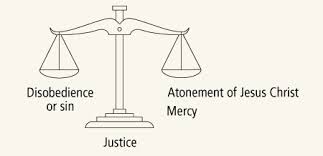
One of the best stories to illustrate our need for a Savior, the “why” and the “how,” is a story entitled “The Mediator” (this link is to the video available on lds.org) , told by Elder Boyd K. Packer, apostle in the LDS Church.  I’ve included it here in its entirety.  The idea of the balance between divine justice and mercy can be difficult to understand.  Some believe that since God loves us all we have to do is to say “I’m sorry” and everything is okay, yet divine justice requires that a penalty must be paid.  This may sound harsh, but just as in a court of law, simply apologizing does not mitigate the penalty imposed by the law, so it is in the eternal courts.  I believe that our true self, our eternal spirit self knows this and acknowledges it as fair and just.  Our true self wants to live by the law of divine justice.  It feels right and good.  Here is Elder Packer’s story:

“Let me tell you a story—a parable.

There once was a man who wanted something very much. It seemed more important than anything else in his life. In order for him to have his desire, he incurred a great debt.

He had been warned about going into that much debt, and particularly about his creditor. But it seemed so important for him to do what he wanted to do and to have what he wanted right now. He was sure he could pay for it later.

So he signed a contract. He would pay it off some time along the way. He didn’t worry too much about it, for the due date seemed such a long time away. He had what he wanted now, and that was what seemed important.

The creditor was always somewhere in the back of his mind, and he made token payments now and again, thinking somehow that the day of reckoning really would never come.

But as it always does, the day came, and the contract fell due. The debt had not been fully paid. His creditor appeared and demanded payment in full.

Only then did he realize that his creditor not only had the power to repossess all that he owned, but the power to cast him into prison as well.

“I cannot pay you, for I have not the power to do so,” he confessed.

“Then,” said the creditor, “we will exercise the contract, take your possessions, and you shall go to prison. You agreed to that. It was your choice. You signed the contract, and now it must be enforced.”

“Can you not extend the time or forgive the debt?” the debtor begged. “Arrange some way for me to keep what I have and not go to prison. Surely you believe in mercy? Will you not show mercy?”

The creditor replied, “Mercy is always so one-sided. It would serve only you. If I show mercy to you, it will leave me unpaid. It is justice I demand. Do you believe in justice?”

“I believed in justice when I signed the contract,” the debtor said. “It was on my side then, for I thought it would protect me. I did not need mercy then, nor think I should need it ever. Justice, I thought, would serve both of us equally as well.”

“It is justice that demands that you pay the contract or suffer the penalty,” the creditor replied. “That is the law. You have agreed to it and that is the way it must be. Mercy cannot rob justice.”

There they were: One meting out justice, the other pleading for mercy. Neither could prevail except at the expense of the other.

“If you do not forgive the debt there will be no mercy,” the debtor pleaded.

“If I do, there will be no justice,” was the reply.

Both laws, it seemed, could not be served. They are two eternal ideals that appear to contradict one another. Is there no way for justice to be fully served, and mercy also?

There is a way! The law of justice can be fully satisfied and mercy can be fully extended—but it takes someone else. And so it happened this time.Balance scales

The debtor had a friend. He came to help. He knew the debtor well. He knew him to be shortsighted. He thought him foolish to have gotten himself into such a predicament. Nevertheless, he wanted to help because he loved him. He stepped between them, faced the creditor, and made this offer.

“I will pay the debt if you will free the debtor from his contract so that he may keep his possessions and not go to prison.”

As the creditor was pondering the offer, the mediator added, “You demanded justice. Though he cannot pay you, I will do so. You will have been justly dealt with and can ask no more. It would not be just.”

And so the creditor agreed.

The mediator turned then to the debtor. “If I pay your debt, will you accept me as your creditor?”

“Oh yes, yes,” cried the debtor. “You save me from prison and show mercy to me.”

“Then,” said the benefactor, “you will pay the debt to me and I will set the terms. It will not be easy, but it will be possible. I will provide a way. You need not go to prison.”

And so it was that the creditor was paid in full. He had been justly dealt with. No contract had been broken. The debtor, in turn, had been extended mercy. Both laws stood fulfilled. Because there was a mediator, justice had claimed its full share, and mercy was fully satisfied.

Each of us lives on a kind of spiritual credit. One day the account will be closed, a settlement demanded. However casually we may view it now, when that day comes and the foreclosure is imminent, we will look around in restless agony for someone, anyone, to help us.

And, by eternal law, mercy cannot be extended save there be one who is both willing and able to assume our debt and pay the price and arrange the terms for our redemption.

Unless there is a mediator, unless we have a friend, the full weight of justice untempered, unsympathetic, must, positively must fall on us. The full recompense for every transgression, however minor or however deep, will be exacted from us to the uttermost farthing.

But know this: Truth, glorious truth, proclaims there is such a Mediator.

“For there is one God, and one mediator between God and men, the man Christ Jesus.” (1 Tim. 2:5.)

Through Him mercy can be fully extended to each of us without offending the eternal law of justice.

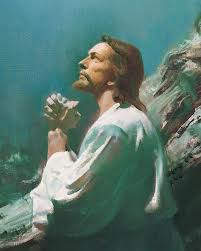
Jesus Gethsemane

Posted in Jesus is the Christe | Tagged , , , , , , , , | Leave a comment

What is the Gospel of Jesus Christ?

Jesus GethsemaneWhat is the gospel of Jesus Christ?  We know that the word gospel means “good news.”  So, is the gospel of Jesus Christ simply good news that is meant to uplift and inspire us?  Yes, it does uplift and inspire us.  As we apply the teachings of Jesus Christ to our lives we  are better people.  Those who consistently apply the teachings of Jesus in their lives , that of love, compassion, service and charity radiate a light in their countenance.  Yes, the gospel of Jesus Christ is all this and more.  Paul teaches that” it is the power of God unto salvation to every one that believeth.” (Romans 1:16)  The gospel then is an actual power that can save us.  From what are we saved ?  The angel who appeared to Joseph explained to him that the baby Mary was carrying was of the Holy Ghost and that he would “save his people from their sins.”

Matthew 1:22 Joseph, thou son of David, fear not to take unto thee Mary thy wife: for that which is conceived in her is of the Holy Ghost. 21  And she shall bring forth a son, and thou shalt call his name JESUS: for he shall save his people from their sins.

Not only are we saved from our sins, but we are also saved from death.  John’s oft-quoted scripture in John 3:17 explains the dual nature of salvation.

John 3:17 16  For God so loved the world, that he gave his only begotten Son, that whosoever believeth in him should not perish, but have everlasting life. 17  For God sent not his Son into the world to condemn the world; but that the world through him might be saved.

Shortly before his death Jesus explained to Mary in even more explicit language that he has overcome death.

John 11:25  Jesus said unto her, I am the resurrection, and the life: he that believeth in me, though he were dead, yet shall he live:

26  And whosoever liveth and believeth in me shall never die.  Believest thou this?

Sin and death are the two irresolvable dilemmas of mankind.   Death is the common lot of all mankind, indeed all living things, animals and plants.  We are born to die.  Our world is in a constant state of decay.  We also all make mistakes.  We each have regrets.  Sometimes our actions are hurtful to others.  We get angry.  We say things we do not mean to say.  Unintended accidents happen that are not our fault, yet cause harm to others.  Our hearts may break because of pain we cause others.  We may break the trust that someone else has in us.  In a myriad of ways we may do things against our conscience or our higher self.   Sometimes our actions are even more egregious.  On a larger scale there are truly evil acts.  What can compensate for man’s inhumanity to man?  How do we undo the harm we may have done to others?  How do we restore that which cannot be restored?

Man’s dilemma of sin

One of the things that distinguishes man from beasts is that we moral reasoning.   Instinctively man knows that it is wrong to murder, steal, lie or have another’s spouse.  He knows this “instinctively”.   We call it man’s conscience.   Interestingly a new study by the Infant Cognition Center of Yale University revealed that infants may be born with a moral code hard-wired in their brains.  (Read more at: http://phys.org/news192693376.html).  The Church of Jesus Christ of Latter-day Saints calls this the “Light of Christ.”

Doctrine and Covenants 84:46 “And the Spirit giveth light to every man that cometh into the world; and the Spirit enlighteneth every man through the world, that hearkeneth to the voice of the Spirit. And every one that hearkeneth to the voice of the Spirit cometh unto God, even the Father.”

Mormon 7:16  “For behold, the Spirit of Christ is given to every man, that he may know good from evil. . . “

With our God-given free will or moral agency, sometimes we choose wrong and experience remorse of conscience.   (It is beyond the scope of this blog to discuss the criminal mind and those who apparently don’t have a conscience.)  Man  has an instinctive need to want to “get things of his chest.”  to confess, to want to make things right.  In her book “Guilt is the Teacher, Love is the Lesson,” psychologist, Joan Borysenko, writes the following:

“Holding onto dark, guilty secrets is similar to repressing trauma–it takes physiological work that leads to increased stress and illness.  I was at a conference once where Dr. James Pennebaker presented studies on the health benefits of confession.  His interest of first picqued by lie detector technicians who told him about all the birthday and Christmas cards they get from grateful prisoners who still remember the vast relief of confessing their crimes!”

This is man’s dilemma of sin.  How does one make up for those things which we have done wrong?  How is that searing conscience soothed?   How are these wrongs absolved?  Our conscience seems to require that a price be paid.   Our conscience seems to be connected to what is called Divine Justice.  Because we can’t completely pay the price that justice requires we need a Savior.   Jesus Christ came to earth to be our Savior.

Elder Boyd K. Packer, an apostle for the LDS Church said the following:

“But sometimes you cannot give back what you have taken because you don’t have it to give. If you have caused others to suffer unbearably—defiled someone’s virtue, for example—it is not within your power to give it back.

There are times you cannot mend that which you have broken. Perhaps the offense was long ago, or the injured refused your penance. Perhaps the damage was so severe that you cannot fix it no matter how desperately you want to.

Your repentance cannot be accepted unless there is a restitution. If you cannot undo what you have done, you are trapped. It is easy to understand how helpless and hopeless you then feel and why you might want to give up, just as Alma did.

Restoring what you cannot restore, healing the wound you cannot heal, fixing that which you broke and you cannot fix is the very purpose of the atonement of Christ.

When your desire is firm and you are willing to pay the “uttermost farthing,”the law of restitution is suspended. Your obligation is transferred to the Lord. He will settle your accounts.”

The above is one of my favorite quotes.  What a wonderful thought!  What a relief!  There is a way to restore, heal and fix our mistakes.

How does Jesus save us from sin?

The next valid question to ask is, “Lord, how is it done?”  While we can never understand exactly how Jesus paid the price for our sins there are some things we can understand.  Jesus is the Son of God.  He lived a perfect, sinless life.  His life embodied pure love and forgiveness for everyone.   In a way inexplicable to us, throughout his life and in particular his suffering in Gethsemane and on the cross, he absorbed all of mankind’s misery, guilt and suffering.  He “descended below all things.”  He paid the price to divine justice for our sins.  Through his infinite love he conquered evil and death.  The Book of Mormon gives us some of the clearest scriptures about the atoning sacrifice of Jesus.

Alma 7: 11  And he shall go forth, suffering pains and afflictions and temptations of every kind; and this that the word might be fulfilled which saith he will take upon him the pains and the sicknesses of his people.

12. And he will take upon him death, that he may loose the bands of death which bind his people; and he will take upon him their infirmities, that his bowels may be filled with mercy, according to the flesh, that he may know according to the flesh how to csuccor his people according to their infirmities.

13  Now the Spirit knoweth all things; nevertheless the Son of God suffereth according to the flesh that he might take upon him the sins of his people, that he might blot out their transgressions according to the power of his deliverance; and now behold, this is the testimony which is in me.

Elder Merrill  J. Bateman, a general authority for the LDS Church said the following in a general conference, October, 2005

For many years I thought of the Savior’s experience in the garden and on the cross as places where a large mass of sin was heaped upon Him. Through the words of Alma, Abinadi, Isaiah, and other prophets, however, my view has changed. Instead of an impersonal mass of sin, there was a long line of people, as Jesus felt “our infirmities” (Heb. 4:15), “[bore] our griefs, … carried our sorrows … [and] was bruised for our iniquities” (Isa. 53:4–5).

The Atonement was an intimate, personal experience in which Jesus came to know how to help each of us.

The Creator of the universe has the power to become intimately acquainted with each of us. He learned about your weaknesses and mine. He experienced your pains and sufferings. He experienced mine. I testify that He knows us. He understands the way in which we deal with temptations. He knows our weaknesses. But more than that, more than just knowing us, He knows how to help us if we come to Him in faith.”

I, too, want to add my testimony that Jesus is my Savior.  I am infinitely and eternally indebted to him for enabling me to overcome my sins and weaknesses so that I can return to live with Him again someday.  In subsequent blogs I post about how Jesus overcame death and more about what the atonement means to me.

Posted in Uncategorized | Tagged , , , , , , , | Leave a comment

How Did Mankind Learn of the Existence of God?

adam and EveGod Reveals Himself to Adam

We know that some kind religion and religious observation has been part of man’s existence from the very beginning of man’s history.  How did man first come up the idea that there was a God?  There have been many scholarly books written about the “evolution” of God or the “history” of God.  Knowing that I approach this subject rather timidly because it is only a  blog post, but I have been thinking about this and have some thoughts that I hope add to the discussion.

Although there is much archeological evidence about the beginnings of man on the earth, the first written information of the history of man is the book of Genesis by Moses.  Since Moses wasn’t alive during the time period of the book of Genesis, it is fair to ask how Moses knew of the those events before he was born.   Again there is much discussion on this subject.  He undoubtedly had access to some kind of record of the historical events he wrote about after the creation and Fall of Adam and Eve, but how did he know about the creation which happened before man came upon the face of the earth?  The following statement is from the website creationstudies.org.

“This section, [meaning Genesis 1-4] describing the initial Creation and the work of the six days,  has no human name attached to it, for the obvious reason that no man was present   at the time to record what happened. It must either have been written directly  by God Himself and then given to Adam, or else given by revelation to Adam, who then recorded it. http://www.creationstudies.org/Education/wrote_genesis.html

Moses, as the writer of the book of Moses, either had access to Adam’s record or the Lord revealed it to him, anew.  Either way, it if clear that the only way for mankind to learn of the existence of God is for God to reveal himself.  Man did not create or invent God.  God created man.  Much has been said about the “evolution” of God as if God were in a process of change, but scriptures teach us that God is from “everlasting to everlasting.”  He is the same, “yesterday, today and forever.”   At various and sundry times through the ages, it is man who has removed himself from God.

“LORD, thou hast been our dwelling place in all generations. Before the mountains were brought forth, or ever thou hadst formed the earth and the world, even from everlasting to everlasting, thou art God (Psalms 90:1-2)

We know that God communicated with Adam in the Garden of Eden.  He also communicated to Adam after he left the Garden.  In the last post I discussed the book of Moses in the Pearl of Great Price.  It sheds great clarity on this subject.

“And Adam and Eve, his wife, called upon the name of the Lord, and they heard the voice of the Lord from the way toward the Garden of Eden, speaking unto them, and they saw him not; for they were shut out from his presence.  And he gave unto them commandments, that they should worship the Lord their God, and should offer the firstlings of their flocks, for an offering unto the Lord.  And Adam was obedient unto the commandments of the Lord.  And Adam and Eve blessed the name of God, and they made all things known unto their sons and their daughters.  (Moses 4:4-, 12)

God, in his infinite mercy, continued to communicate to Adam and Eve.  They knew and worshipped God.  He gave them commandments for right living and he was obedient to those commandments.  They taught their children about God because they had personal experience with Him. Joseph Smith discusses this topic in his book Lectures on Faith.”

[We have discussed] the way by which mankind were first made acquainted with the existence of a God; that it was by a manifestation of God to man, and that God continued, after man’s transgression, to manifest himself to him and to his posterity; and, notwithstanding they were separated from his immediate presence that they could not see his face, they continued to hear his voice.  Adam, thus being made acquainted with God, communicated the knowledge which he had unto his posterity; and it was through this means that the thought was first suggested to their minds that there was a God, which laid the foundation for the exercise of their faith, through which they could obtain a knowledge of his character and also of his glory. (Lectures on Faith, #2)

Adam communicates a knowledge of God to his posterity

As the above quotes states, “Adam, thus acquainted with God, communicated the knowledge which he had to his posterity.” The idea of God is first presented to each of us by another human being, usually our parents, but, certainly not always.  It is by human testimony that we have the first thoughts presented to us that there is a God.  Joseph continues:

“From this we can see that the whole human family in the early age of their existence, in all their different branches, had this knowledge disseminated among them; so that the existence of God became an object of faith in the early age of the world. And the evidences which these men had of the existence of a God, was the testimony of their fathers in the first instance. Let this class mark particularly, that the testimony which these men had of the existence of a God, was the testimony of man; for previous to the time that any of Adam’s posterity had obtained a manifestation of God to themselves, Adam, their common father, had testified unto them of the existence of God, and of his eternal power and Godhead.”  (Lectures on Faith, #2)

All through the ages faith comes by hearing the word of God

Paul teaches the same thing when he says that faith comes by hearing the word of God.

“How then shall they call on him in whom they have not believed?  and how shall they believe in him of whom they have not heard?  and how shall they hear without a preacher?And how shall they preach, except they be sent?  So then faith cometh by hearing, and hearing by the word of God.” (Romans 10:14-17)

If the faith of others could be dependent on my communication of my faith, how great is my responsibility to communicate that faith to others, to let my light shine.   I have been in the presence of great men and women of faith who have communicated their faith to me in ways that have burned into my heart.  I  had no doubt that they knew.

Posted in Existence of God | Tagged , , , , , , , | Leave a comment

The Book of Moses in the Pearl of Great Price

Last night we had the missionaries from our church over for dinner.  After dinner we gathered our in the living room for a message from them and a prayer.  Since it’s Thanksgiving we have two of our daughters here with us and their families, there about 15 of us gathered round.  There was a sweet spirit there as the missionaries asked each of us to express gratitude for some aspect of the restored gospel of Jesus Christ.  When we speak of our church as being the restored gospel, we mean that through the prophet Joseph Smith many parts of the church in Jesus’ time, which had been lost over time, were again restored to his church.  When it was my turn I expressed gratitude for the Book of Mormon and our other modern-day scriptures.  As I read them I know that Joseph, an uneducated, backwoods farm boy, could not have written such sublime, inspired words

The Joseph Smith Translation of the Bible (JST)

One of the many contributions which Joseph Smith made to the religious world is a revision of many parts of the Bible. Some might take umbrage that the Bible might need revisions, but the Bible has been translated over a hundred times by various individuals and religions. With every translation of the Bible revisions have been made and attempts made to clarify the more obscure passages.  One of the more common Bibles in use in many Protestant churches in the USA is the New Revised Standard Version which is a revision of a revision.  It was revised by a committee of scholars representing Catholic, Protestant and Jewish groups.  The mandate given the committee was summarized in a dictum:  “As literal as possible, as free as necessary.” (Wikipedia article, “New Revised Standard Version of the Bible”)  This revision attempted to please as many groups as possible and in the process watered down many doctrines, including changes to gender-specific language.

The official Bible of the LDS church is the King James Version.  Soon after the church was organized Joseph was commanded to go through the Bible making revisions or additions as he was directed by the spirit.  Robert J. Matthews, a professor of ancient scripture at BYU, said the following:

“We should be appreciative of the great spiritual heritage and source of inspiration that has come to us through the Bible, yet readers the world over have recognized for many years that the Bible has not come to us in its original purity and plainness. . . The thoughtful reader of the Bible soon observes that there are many passages that are vague and hard to understand and that seem to be incomplete. Some passages also appear to be contradictory. We understand that there are not so many things in the King James Version of the Bible that are incorrect, but rather, because of faulty transmission and missing parts, that which remains is often unclear and devoid of its full meaning. Joseph Smith’s work with the Bible restores some of the missing parts and causes what we have to be more meaningful.” (Ensign/1972, Joseph Smith’s Inspired Version of the Bible, Robert J. Matthews)

The verses that Joseph clarified are footnoted with the changes appearing in the footnotes.  More lengthy changes are included in the appendix.  Joseph didn’t translate per se, in that he didn’t work from texts of the original languages.  As he read the Bible and prayed for understanding, he was inspired to make the changes.   As I read the JST verses I’m amazed at how changing a few simple words adds so much to the clarity.  For instance the first four verses of John read as thus in the King James Version of the Bible read as thus:

 IN the beginning was the Word, and the Word was with God, and the Word was God. The same was in the beginning with God.  All things were made by him; and without him was not any thing made that was made.  In him was life; and the life was the light of men.

Here are the same verses in the Joseph Smith Translation.  The changes are in bold lettering.   One can readily appreciate the additional understanding the Joseph Smith Translation gives to these verses, identifying the “Word” as Jesus Christ.

 In the beginning was the gospel preached through the Son. And the gospel was the word, and the word was with the Son, and the Son was with God, and the Son was of God.   The same was in the beginning with God.  All things were made by him; and without him was not anything made which was made.  In him was the gospel, and the gospel was the life, and the life was the light of men;

The Book of Moses

The book of Genesis is our introduction to God.  The LDS Guide to the Scriptures emphasizes the importance of the book of Genesis.  It states:

“It is the true and original birthplace of all theology.  It contains those ideas of God and man, of righteousness and judgment, of responsibility and moral government, of failure and hope, which are presupposed through the rest of the O.T. and which prepare the way for the mission of Christ.   In latter-day revelation we find many sources of information that clarify and substantiate the record of Genesis.   Of particular importance is the book of Moses. (lds.org)

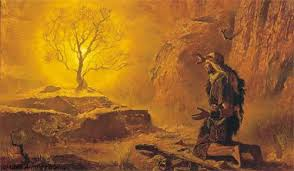
The Book of Moses  is among the greatest contributions of the Joseph Smith Translation.  It gives an account of some visions and experiences of Moses previous to and in preparation for writing Genesis.  As Joseph began studying the book of  Genesis, he was inspired to add a vision of Moses as a prologue to the story of the Creation and the Fall of man.  In this most remarkable vision Moses sees God face to face.   Moses is called to his great life work, not only as the one who would deliver the children of Israel from the bondage, but the one who is commissioned to write an account of the creation of the earth.  Moses is considered to be the author of the book of Genesis.   How did he get access to a knowledge of the creation of the earth?  Clearly God would have had to communicate this knowledge to him.  This vision contains God’s revelation to Moses of the creation and his instruction to him to write it down as dictated directly by God.

Moses burning bushMoses chapter 1 contains the first recorded words of God to man.  What does he want us to learn?   In the very beginning verses we are taught through Moses who God is and our relationship to Him.  God speaks to Moses very personally, calling him his son.  To me, this chapter is like a concentrated beam of truth and light shed on the nature of God and our relationship to him. Each of us can take comfort in this scripture and know that we are all sons and daughters of God.  God knows our name.  He is our personal, loving Father.  Moses is also taught about Jesus Christ, that he is the Only Begotten of the Father and our Savior.   What precious knowledge this is!   These truths are the foundation of Christianity.

THE words of God, which he spake unto Moses at a time when Moses was caught up into an exceedingly high mountain.  And he saw God face to face, and he talked with him, and the glory of God was upon Moses; therefore Moses could endure his presence.  And God spake unto Moses, saying: Behold, I am the Lord God Almighty, and Endless is my name; for I am without beginning of days or end of years; and is not this endless?  And, behold, thou art my son; wherefore look, and I will show thee the workmanship of mine hands. . .  And I have a work for thee, Moses, my son; and thou art in the similitude of mine Only Begotten; and mine Only Begotten is and shall be the Savior, for he is full of grace and truth; but there is no God beside me, and all things are present with me, for I know them all.

Moses is then shown an expansive vision of the earth and all its inhabitants.   Afterwards he is so overcome by the spirit that his natural strength leaves him.  He is left to himself for several hours.  Moses then has an encounter with Satan and overcomes him through calling upon God.  After this test with Satan Moses is given his call to deliver Israel and is shown another vision of all of God’s creations.   Moses’ wonders at the majesty of God’s creations and desires to know more about its creation.  God tells Moses that he will show him concerning this earth and then commands him to write of the creation of the world.

 “And it came to pass that Moses spake unto the Lord, saying: Be merciful unto thy servant, O God, and tell me concerning this earth, and the inhabitants thereof, and also the heavens, and then thy servant will be content.”   And now, Moses, my son, I will speak unto thee concerning this earth upon which thou standest; and thou shalt write the things which I shall speak. Moses 1:36, 40)

This is an amazing chapter!  It has so many concentrated truths that it’s best to divide it up into sections to study it.  In subsequent blogs I’ll discuss  more in depth some of these topics.

Personal application in my life:  God is real!  He communicates to his children.  He wants us to understand our relationship with Him.  He loves his children.  The gospel of Jesus Christ is the same through the ages.   Joseph Smith is an instrument in the hands of God to bring forth modern-day revelation.


Posted in The Book of Moses | Tagged , , , , , , | Leave a comment

The Testimony of Jesus during “Intertestamental” Period

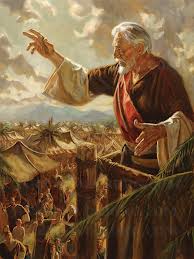
King BenjaminThe greater part of the Book of Mormon was written before Christ’s coming. It begins about 600 BC during the reign of King Zedekiah. The Bible ends its narrative in about 400 BC. The Book of Mormon gives the prophetic word of God during the period of time which is called the “intertestamental period”, a term used to refer to a period of time between the writings of the Hebrew Bible and the Christian New Testament texts. Traditionally, it is considered to be a roughly four hundred year period, spanning the ministry of Malachi (c. 420 BC), the last of the Old Testament prophets, and the appearance of John the Baptist in the early 1st century AD. It is known by members of the Protestant community as the “400 Silent Years” because it is believed to have been a span where God revealed nothing new to his people.

The Book of Mormon  is especially relevant because it shows that God was not “silent” during those 400 years prior to Christ’s coming.   A continuing line of prophets bore witness of the coming of a Messiah through obedience to the sacrificial rites of the law of Moses.   The following scripture was written sometime between 399-361 BC

“Wherefore, the prophets, and the priests, and the teachers, did labor diligently, exhorting with all long-suffering the people to diligence; teaching the law of Moses, and the intent for which it was given; persuading them to look forward unto the Messiah, and believe in him to come as though he already was.  And after this manner did they teach them.”  (Jarom 1:11)

The next 200 years pass quickly  in the Book of Mormon.  Even though our current Book of Mormon is an abridgment, it is evident that God spoke to his prophets during this period.  There were periods of wickedness and righteousness among the Nephites, the ones who kept the records, yet we know that they had prophets who continued to teach them.   Undoubtedly the more complete record would be replete with the testimony of prophets.  The records were handed down father to son to brother.  Amaleki, one of the later prophets during this period, bore the following fervent testimony of Jesus.

And now, my beloved brethren, I would that ye should come unto Christ, who is the Holy One of Israel, and partake of his salvation, and the power of his redemption.  Yea, come unto him, and offer your whole souls as an offering unto him, and continue in fasting and praying, and endure to the end; and as the Lord liveth ye will be saved.” (Omni 1:26)

A very concentrated portion of the Book of Mormon covers the 130 years before Christ’s birth.  It is rich in the testimony of Jesus born by prophets and other religious leaders.  The gospel of Jesus Christ is taught with clarity and truth.  It shows that the people continued to keep the Law of Moses as means to point their hearts and minds to Christ.

“Yea, and they did keep the law of Moses; for it was expedient that they should keep the law of Moses as yet, for it was not all fulfilled.  But notwithstanding the law of Moses, they did look forward to the coming of Christ, considering that the law of Moses was a type of his coming, and believing that they must keep those outward performances until the time that he should be revealed unto them.  Now they did not suppose that salvation came by the law of Moses; but the law of Moses did serve to strengthen their faith in Christ; and thus they did retain a through faith, unto eternal salvation, relying upon the spirit of prophecy, which spake of those things to come.”   (Alma 25:15-16)

The Book of Mormon shows how merciful God is as He continues to communicate to His children through his prophets during this time.  He was preparing a people for the coming of his Son. Why would this occur only among the Book of Mormon people? One answer might be that they were free from the oppression of foreign governments and entanglements. They were also free from the reign of tyrannical kings. About 93 BC the form of government among the Nephites peacefully changed from a reign of kings to a democracy with elected leaders.  This could possibly be the first democratic government in recorded history.   The political leaders in the Book of Mormon were often their spiritual leaders. Freedom of religion was paramount. Indeed wars were fought to protect religious liberty.

Their religious freedom was essential for the prophetic word to be taught without hindrances. Although their government was corrupt at times, prophets could still preach the truth, testify, call people to repentance and expose corruption. It appears that God had preserved a people and a government to whom he could reveal his truths during this intertestamental period.

How grateful I am the testimony of these Book of Mormon prophets! I feel like Alma did at one point when he exclaimed:

“O THAT I were an angel, and could have the wish of mine heart, that I might go forth and speak with the trump of God, with a voice to shake the earth, and cry repentance unto every people! Yea, I would declare unto every soul, as with the voice of thunder, repentance and the plan of redemption, that they should repent and come unto our God, that there might not be more sorrow upon all the face of the earth.” (Alma 29:1-2)

I hope those who read this blog will read the Book of Mormon and gain a testimony of its truthfulness by sincerely praying about it with real intent.   I know that “If ye  ask God, the Eternal Father, in the name of Christ, if these things are not true; and if ye shall ask with a sincere heart, with real intent, having faith in Christ, he will manifest the truth of it unto you, by the power of the Holy Ghost.”  (Moroni 10:4)

Posted in prophets, Testimony of Jesus | Tagged , , , , , , | Leave a comment

Adam Was Taught the Gospel of Christ

christusIn the year 2000 the Church of Jesus Christ of Latter-day Saints issued a Declaration entitled.  The Living Christ.  It opens with the following statement:

As we commemorate the birth of Jesus Christ two millennia ago, we offer our testimony of the reality of his matchless life and the infinite virtue of his great atoning sacrifice.  None other has so profound an influence upon all who have lived or will yet live upon the face of the earth. . . We solemnly testify that His life, which is central to all human history, neither began in Bethlehem nor concluded on Calvary. He was the Firstborn of the Father, the Only Begotten Son in the flesh, the Redeemer of the world.”

If Jesus’ life is central to all human history, and it is, and if salvation is only through Jesus Christ, and it is, then a loving God would surely communicate a knowledge of His Son to his children in all ages.  The question I ask myself is: when and how did God start communicating this knowledge?   Surely the answer must be that God communicated this knowledge at the very beginning of man’s existence on earth to Adam, yet we have no of this communication in the Biblical record.   The Pearl of Great Price, another of the standard works of the LDS church, contains added information to the first seven chapters of Genesis. It is precious knowledge indeed as it shows how God taught Adam the gospel of Jesus Christ.

One might appropriately ask what the Book of Moses is in the Pearl of Great Price. One of the many contributions which Joseph Smith made to the religious world is a revision of many parts of the Bible. Some might take umbrage that the Bible might need revisions, but the Bible has been translated over a hundred times by various individuals and religions. With every translation of the Bible revisions have been made and attempts made to clarify the more obscure passages.   I will do another post about the Joseph Smith Translation, but here I want to focus on the fact that the gospel of Jesus Christ was taught to Adam.

Genesis chapter 4 begins with the account of Cain and Abel  offering sacrifices to the Lord.  Cain and Abel had different occupations.  Abel was a “keeper of the sheep” and Cain was a “tiller of the ground”.  Both seemed to be legitimate occupations.  Each offered a sacrifice to the Lord; Cain, the “fruit of the ground,” and Abel the “firstlings of his flocks.”  It is not explained why Abel’s sacrifice was accepted by God and Cain’s wasn’t.  It has been left to gospel scholars to try and explain this incongruence.

In his landmark book The Genesis Record, the late Dr. Henry Morris, one of the founders of the modern creation movement, speculates on why Cain’s offering was rejected:

The Bible does not actually say specifically whether such sacrifices had been commanded by God, or whether the practice arose merely as a spontaneous expression of thanksgiving and worship. If it was the latter, however, it is difficult to understand why God would not have been as pleased with an offering of Cain’s fruits as with an offering of Abel’s slain lamb. It seems more likely that God did give instructions, and that Cain had disobeyed. The entire occurrence can only be really understood in the context of an original revelation by God regarding the necessity of substitutionary sacrifice as a prerequisite to approaching God. Such revelation was most likely given at the time God provided coats of skins for Adam and Eve, and then banished them from his presence, providing, however, a specific means by which they could still commune with Him at certain times, on the basis of a similar sacrifice.

The amazing thing is that Moses chapter 5 in the Pearl of Great Price, which corresponds to Genesis 4, does indeed show that there was an original revelation by God concerning the law of sacrifice.   In Moses 5, there are several verses which explain God’s commandment to Adam to offer sacrifices, their purpose and meaning.

And Adam and Eve, his wife, called upon the name of the Lord, and they heard the voice of the Lord from the way toward the Garden of Eden, speaking unto them, and they saw him not; for they were shut out from his presence.  And he gave unto them commandments, that they should worship the Lord their God, and should offer the firstlings of their flocks, for an offering unto the Lord.  And Adam was obedient unto the commandments of the Lord.  And after many days an angel of the Lord appeared unto Adam, saying: Why dost thou offer sacrifices unto the Lord?  And Adam said unto him: I know not, save the Lord commanded me. And then the angel spake, saying: This thing is a similitude of the sacrifice of the Only Begotten of the Father, which is full of grace and truth.  Wherefore, thou shalt do all that thou doest in the name of the Son, and thou shalt repent and call upon God in the name of the Son forever.  And in that day the Holy Ghost fell upon Adam, which beareth record of the Father and the Son, saying: I am the Only Begotten of the Father from the beginning, henceforth and forever, that as thou hast fallen thou mayest be redeemed, and all mankind, even as many as will. (Moses 5:4-8)

I believe that is a most amazing scripture!  It explains fully the meaning of their sacrifices.  It shows clearly that Adam knew of Jesus Christ and that redemption is only in through Christ.  I do not believe that Joseph Smith, an uneducated, backwoods farm boy, could have written such a profound statement.

What happens next?  Adam and Eve teach the gospel to their children.  In that teaching they are assisted by the Holy Ghost.   This is the pattern, is it not?  Parents teach their children.  Parents plant in the hearts of their children their faith and testimony.

 “And Adam and Eve blessed the name of God, and they made all Adam and Evethings known unto their sons and their daughters. . .  And the Lord God called upon men by the Holy Ghost everywhere and commanded them that they should repent;  And as many as believed in the Son, and repented of their sins, should be saved; and as many as believed not and repented not, should be damned; and the words went forth out of the mouth of God in a firm decree; wherefore they must be fulfilled. (Moses 5:12, 14-15)

These scriptures clearly show the gospel of Jesus Christ is the same “yesterday, today, and forever.’  One of Jesus’ last commandments to his apostles was to “go ye into all he world and preach my gospel. He that believeth and baptized the same shall be saved, but he that believeth not shall be damned.”   The scriptures in the Book of Moses fit perfectly with those in the Bible.  They augment and elucidate difficult issues. Not only does it make perfect sense to me that Adam was taught the gospel of Jesus Christ, but the Holy Ghost bears witness to me that it is true!

Posted in Jesus is the Christe | Tagged , , , , , , , , , | Leave a comment

THE POWER OF THE BOOK OF MORMON

lamp to my feetTHE TREMENDOUS POWER OF UNSEEN FORCES IN THE UNIVERSE

President Benson has boldly declared, “It is not just that the Book of Mormon teaches us truth, though it indeed does that.  It is not just that the Book of Mormon bears testimony of Christ, though it indeed does that, too.  But there is something more. But there is something more. There is a power in the book which will begin to flow into your lives the moment you begin a serious study of the book.   That is a bold statement!  He says there is “power in the book.”  What sort of power?  How is that power manifest?

Since “power” is intangible, we can only define power as we see the results of power or its effect on something.    When we speak of the power of the wind it is because we see the effects of wind.  Similarly the power of water is defined when we see its effects.   In the natural world we could substitute the word “energy” for power.

The most powerful forces in the universe are unseen.  The energy contained in gravity, electricity, radio waves, magnetism, heat, light and the sun affect each of us every day.  We are literally surrounded by unseen energy and vibration. The tremendous energy in our weather patterns are created because of the energy radiated by the sun, energy so powerful that it reaches us, though it travels millions of miles through space.  Radio waves bounce about us continually.  Vast amounts of information are transmitted instantly all over the globe via unseen energy.

All of this power has one source, the light of Christ.  In a scripture in the Doctrine and Covenants, another scriptural book of the LDS church, the light of Christ is explained as the “light which proceedeth forth from the presence of God to fill the immensity of space.”  It is the “light which is in all things, which giveth life to all things, which is the law by which all things are governed, even the power of God who sitteth upon his throne.”  (D&C 88:13) :Indeed, God is not only all powerful, but the source of all power.  After his resurrection Jesus says, “all power is given unto me in heaven and earth.” (Matthew 28:18)

Man has gained great knowledge about the powers of the universe, but sometimes we think it is solely our own efforts.  We marvel at the exponential explosion of knowledge in the last 200 years and mistaken think it’s completely the product of man’s ingenuity, but it is God who has graciously allowed man to access this knowledge through the Light of Christ.  Without the Light of Christ, men’s minds are darkened.  There would be no forthcoming knowledge.   Hannah in 1 Samuel 2:3 praises God and says, “Talk no more exceedingly proud; let not arrogancy come out of thy mouth;  for he Lord is a God of knowledge.”  Many scientists have humbly acknowledged that God led them in their discoveries.  Isaac Newton considered God to be essential to nature and the absoluteness of space.  He said, “The most beautiful system of the sun, planets, and comets, could only proceed  from the counsel and dominion of an intelligent and powerful Being.”  http://www.godandscience.org/apologetics/sciencefaith.html

THE WORDS OF CHRIST CONTAIN GREAT POWER AND ENERGY

The words of Jesus Christ contain power.  John tells us that “in the beginning was the Word, and the Word was with God, and the word was God. . . all things were made by him; and without was anything made that was made.” (John 1:3))   In Genesis God spoke and said, ”Let there be light and there was light.”(Genesis 1:3)  Jacob, Nephi’s younger brother describes the power of the words of Christ during the creation of the earth.  For behold, by the power of his word man came upon the face of the earth, which earth was created by the power of his word.  Wherefore, if God being able to speak and the world was, and to speak and man was created, O then, why not able to command the earth, or the workmanship of his hands upon the face of it, according to his will and pleasure?”   (Jacob 4:9)  When Jesus was aboard the ship with his disciples and a great storm arose with a tremendous wind, all Jesus had to do was speak and the wind stopped.  It was by the power of his word.  Paul teaches that Jesus “upholdeth all things by the word of his power.” (Hebrews 1:3)

OUR THOUGHTS ARE AN ENERGY FIELD

There is great energy all around us.  Our thoughts have an energy field.  Each of us projects energy into the universe.  David O. McKay, the 9th President of the church, said the following:

“Every person who lives in this world wields an influence, whether for good or for evil. It is not what he says alone, it is not alone what he does. It is what he is. Every man, every person radiates what he or she is. Every person is a recipient of radiation. The Savior was conscious of that. Whenever he came into the presence of an individual, he sensed that radiation—whether it was the woman of Samaria with her past life; whether it was the woman who was to be stoned or the men who were to stone her; whether it was the statesman, Nicodemus, or one of the lepers. He was conscious of the radiation from the individual. And to a degree so are you, and so am I. It is what we are and what we radiate that affects the people around us.

… As individuals, we must think nobler thoughts. We must not encourage vile thoughts or low aspirations. We shall radiate them if we do. If we think noble thoughts, if we encourage and cherish noble aspirations, there will be that radiation when we meet people, especially when we associate with them.

The effect of our words and acts is tremendous in this world. Every moment of life you are changing to a degree the lives of the whole world. … So, it’s not the surroundings, it isn’t the positions; the thing that will influence [others] in this world, are personalities. No matter what you are people will feel and recognize this. You radiate, you can’t hide it. You may pretend something else, but that will not affect people.”8

President Brigham Young also talks about that “invisible influence which attends visible beings.”

“I rejoice in the privilege of meeting with the Saints, in hearing them speak, and enjoying the influence that is within and around them.  That influence opens to my understanding the true position of those who are endeavoring to serve their God.  I do not require to hear them speak to enable me to know their feelings.  Is it not also your experience that, when you meet persons in the street, in your houses, in your offices, or in the workshops, more or less of an influence attends them which conveys more than words can?. . . That knowledge is obtained through that influence which attends intelligent beings, and betrays the atmosphere in which they delight of live.” (Brigham Young, Journal of Discourses, 3:225)

NATURE RADIATES POWER AND ENERGY

                Why do we love to be in a beautiful natural setting?  What is it about the green of the grass, the beauty of flowers, the majesty of mountains, or the rhythm of the ocean waves that seem to soothe us?  The earth emits life-giving energy.   Moses tells us that plants became “living souls.” And out of the ground made I, the Lord God, to grow every tree, naturally, that is pleasant to the sight of man; and man could behold it.  And it became also a living soul.”  (Moses 3:9)  A few years ago I visited Switzerland, the home of my ancestors.  I was overwhelmed with the beauty surrounding me.  It was ineffable.  The only thing I thought to do was write a poem.  I would like to share it with you.  I don’t consider myself a poet, but these words just came to me as a gift.

To Switzerland

I am surrounded by breathtaking beauty.

Encompassed by life-giving energy.

Lush shades of green envelop me,

Whispering to me that God is near.

What a feast my eyes behold!

How can such beauty be described?

My eyes see, but the grandeur enters my soul.

I become one with everything I see.

Mountain brooks sing over moss-covered rocks,

Wildflowers splash the mountainside with color

Splendid trees tower about me,

A carpet of green spreads beneath them.

Life giving water flows from mountain snows,

Moisture nourishes the earth through foggy mists,

Clouds drift in and out and everywhere,

Mysteriously revealing shadowy mountain peaks.

Ancient cabins dot the hillside,

Their wood weathered with stories,

Oh, if I could only read their secrets!

I wonder who lived and loved and died there.

Lush mountain meadows drape the hillside,

Cream colored cows graze peacefully,

Bells round their necks gently sway,

Their symphony of tones creating a magnificent bell choir.

These are my roots,

This is my ancestral home.

I was born here centuries ago.

Though I say good-by for now,

My heart will always be in my mountain home.

ALL OBJECTS RADIATE ENERGY

Not only do we as people and all of nature radiate energy, inanimate objects do as well.  Jacque Lusseyran, a hero of the French Resistance in World War II, lost his eyesight when he was seven years old.  He describes learning to discern the unseen energy and light around him.

I was aware of a radiance emanating from a place I knew nothing about, a place which might as well have been outside me as within.  But, radiance was there, or, to put it more precisely, light.  It was a fact, for light was there. . . [It was] a light so continuous and so intense [and] was so far beyond my comprehension that sometimes I doubted it. . . How could I have lived all that time without realizing that everything in the world has a voice and speaks?  Not just things that are supposed to speak, but the others, like the gate, the walls of the house, the shade of the trees, the sand and the silence.” 10

THE MAGNITIC PULL OF THE BOOK OF MORMON

 All of the above are different manifestations of the power of the Light of Christ which surrounds us.  This power is stronger than sight or any of the five senses.  The Light is Christ is like a magnet which draws us to everything good.  In like manner there is actual power in the Book of Mormon.  Though inanimate, it radiates light and energy.  It contains the words of Christ which have a drawing power that will bring us to Christ if we will allow it to.  Perhaps this pull is not unlike the power of a magnetic field.

The vibrational energy of the words, thoughts, faith and prayers of the writers of the Book of Mormon were directed towards its future readers.  Their prayers transcended time and space. Enos, another writer in the Book of Mormon, prayed with great faith that the record which he was writing would be preserved for future generations, that it might bring them to Christ.

Wherefore, I knowing that the Lord God was able to preserve our records, I cried unto him continually, for he had said unto me: Whatsoever thing ye shall ask in faith, believing that ye shall receive in the name of Christ, ye shall receive it. . . And I had faith, and I did cry unto God that he would preserve the records; and he covenanted with me that he would bring them forth . . . in his own due time.” (Enos 1:16)

Enos’ fervent prayer was for future generations.  The Lord answered his prayer with a promise that he would do as Enos desired.  Nephi also wrote with great love for his future readers.  He said, “But I, Nephi, have written what I have written, and I esteem it as of great worth, and especially unto my people.  For I pray continually for them by day, and mine eyes water my pillow by night, because of them; and I cry unto my God in faith, and I know that he will hear my cryAnd I know that the Lord God will consecrate my prayers for the gain of my people.  And the words which I have written in weakness will be made strong unto them; for it apersuadeth them to do good; it maketh known unto them of their fathers; and it speaketh of Jesus, and persuadeth them to believe in him, and to endure to the end, which is life beternal. (2 Nephi 33:3-4)

I have felt the power of Nephi’s prayer in my life.  His prayer has been answered in my life because the Book of Mormon has “persuaded me to do good and to believe in Jesus.”

 In Isaiah 29 there is a rather obscure prophesy about a voice speaking from the dust. “And thou shalt be brought down, and shalt speak out of the ground, and thy speech shall be low out of the dust, and thy voice shall be, as of one that hath a familiar spirit, out of the ground, and thy speech shall whisper out of the dust.” (Isaiah 29:2) He then speaks of a sealed book that is delivered to a man who is “not learned”, and that the Lord will do proceed to do a “marvelous work and a wonder.”

Is not the Book of Mormon as a “voice which whispers out of the dust?”  It has a familiar spirit to those who have ears to hear.  Speaking of our day Nephi makes a similar prophecy as Isaiah, “yet the words of the righteous shall be written, and the prayers of the faithful shall be heard, and all those who have dwindled in unbelief shall not be forgotten. . . . For those who shall be destroyed shall speak unto them out of the ground, and their speech shall be low out of the dust, and their voice shall be as one that hath a familiar spirit; for the Lord God will give unto him power, that he may whisper concerning them, even as it were out of the ground; and their speech shall whisper out of the dust.” (2 Nephi 26:15-16)  Could it be that we are actually feeling the vibrational energy of the power of their testimony?  The scripture says that God will give their words power that those words will touch our hearts.   Could this be the actual power that President Benson is talking about?   I believe it could be so.  Why would the words of the Book of Mormon seem familiar to us when we hear them for the very first time?  Perhaps the power of the words of the Book of Mormon even extend from the spiritual realm of our pre-existence.  The truths taught in the Book of Mormon were taught to us before we were even born.  When we hear them again it is as if we are remembering something we were taught long ago.  The Doctrine and Covenants teaches us that “we received our first lessons in the world of spirits.” (D&C 138:56)  Our first tutorial of the Book of Mormon was before we were even born.

When President Benson says that there is a power which will begin to flow into your lives the moment you begin a serious study of the Book of Mormon, he is speaking a REAL POWER.  He goes on the say, “You will find greater power to resist temptation. You will find the power to avoid deception. You will find the power to stay on the strait and narrow path. The scriptures are called “the words of life” (D&C 84:85), and nowhere is that more true than it is of the Book of Mormon. When you begin to hunger and thirst after those words, you will find life in greater and greater abundance.”

President Benson then quotes from Elder Marion G. Romney.  “Our beloved brother, President Marion G. Romney, who celebrated his eighty-ninth birthday last month and who knows of himself of the power that resides in this book, testified of the blessings that can come into the lives of those who will read and study the Book of Mormon. He said:  “I feel certain that if, in our homes, parents will read from the Book of Mormon prayerfully and regularly, both by themselves and with their children, the spirit of that great book will come to permeate our homes and all who dwell therein. The spirit of reverence will increase; mutual respect and consideration for each other will grow. The spirit of contention will depart. Parents will counsel their children in greater love and wisdom. Children will be more responsive and submissive to the counsel of their parents. Righteousness will increase. Faith, hope, and charity—the pure love of Christ—will abound in our homes and lives, bringing in their wake peace, joy, and happiness” (Ensign, May 1980, p. 67).

These promises—increased love and harmony in the home, greater respect between parent and child, increased spirituality and righteousness—are not idle promises, but exactly what the Prophet Joseph Smith meant when he said the Book of Mormon will help us draw nearer to God.”10

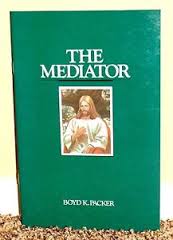
Posted in Nearer to God | Tagged , , , , , , , , , , , , , , , , | Leave a comment